Creating a social media campaign for gambling harm prevention as a volunteer can be highly impactful. Here’s a step-by-step guide on how to structure the campaign:
- Set Clear Objectives
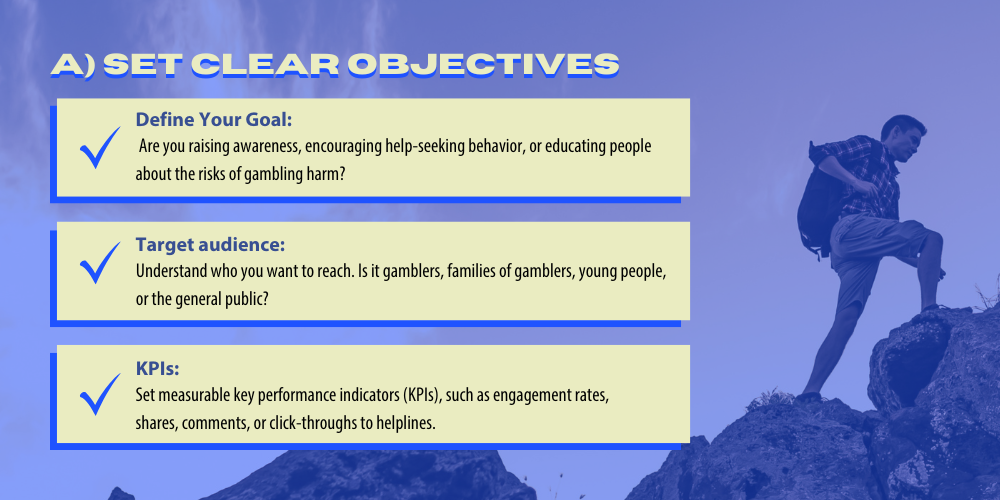
- Define your goal: Are you raising awareness, encouraging help-seeking behavior, or educating people about the risks of gambling harm?
- Target audience: Understand who you want to reach. Is it gamblers, families of gamblers, young people, or the general public?
- KPIs:Set measurable key performance indicators (KPIs), such as engagement rates, shares, comments, or click-throughs to helplines.
- Create Key Messages
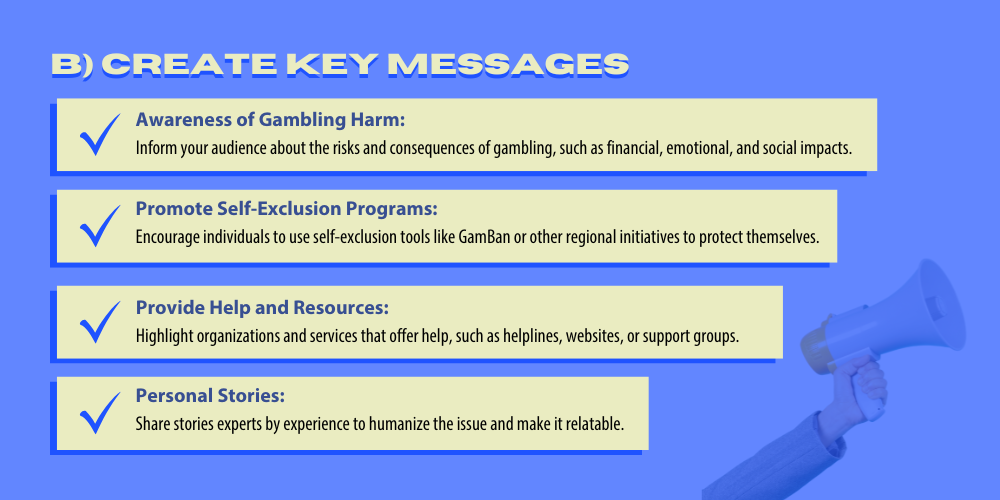
- Awareness of Gambling Harm: Inform your audience about the risks and consequences of gambling, such as financial, emotional, and social impacts.
- Provide Help and Resources: Highlight organizations and services that offer help, such as helplines, websites, or support groups.
- Personal Stories: Share stories experts by experience to humanize the issue and make it relatable.
- Promote Self-Exclusion Programs: Encourage individuals to use self-exclusion tools like GamBan or other regional initiatives to protect themselves.
- Choose the Right Platforms
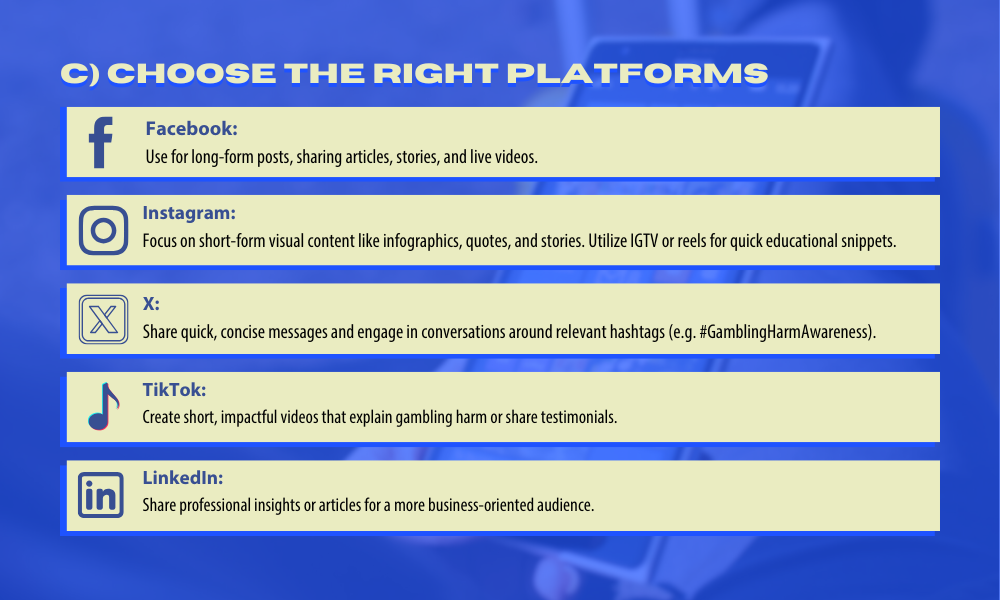
- Facebook: Use for long-form posts, sharing articles, stories, and live videos.
- Instagram: Focus on short-form visual content like infographics, quotes, and stories. Utilize IGTV or reels for quick educational snippets.
- Twitter: Share quick, concise messages and engage in conversations around relevant hashtags (e.g., #GamblingHarmAwareness, #EndGamblingHarm).
- TikTok: Create short, impactful videos that explain gambling harm or share testimonials.
- LinkedIn: Share professional insights or articles for a more business-oriented audience.
- Design Engaging Content
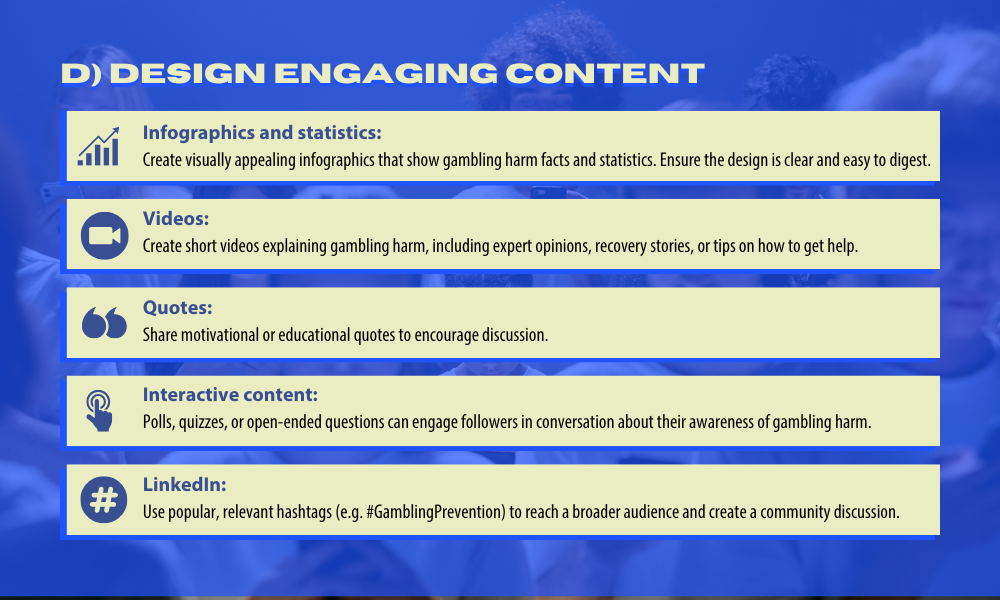
- Infographics and statistics: Create visually appealing infographics that show gambling harm facts and statistics. Ensure the design is clear and easy to digest.
- Videos: Create short videos explaining gambling harm, including expert opinions, recovery stories, or tips on how to get help.
- Quotes: Share motivational or educational quotes to encourage discussion.
- Interactive content: Polls, quizzes, or open-ended questions can engage followers in conversation about their awareness of gambling harm.
- Hashtags: Use popular, relevant hashtags (#GamblingPrevention, #StopGambling, #GamblingAddiction, etc.) to reach a broader audience and create a community discussion.
e) Engage with Your Audience
- Respond to comments: Interact with followers, answer questions, and provide additional resources or support.
- Ask questions: Encourage discussions by asking about their experiences or opinions on gambling.
- User-generated content: Invite your followers to share their stories or recovery journeys, ensuring a respectful and supportive environment.
- Partner with Influencers or Organizations
- Reach out to experts: Collaborate with organizations, influencers, or local communities involved in gambling harm prevention for broader reach.
- Guest posts: Work with experts or people with lived experience to share their insights.
- Collaborate with helplines: Connect with gambling harm prevention organizations and promote their services and campaigns.
- Content Calendar and Consistency
- Plan your posts ahead of time to maintain a consistent message
- Schedule posts using tools like Hootsuite or Buffer to keep the campaign organized.
- Maintain a balance between educational posts, personal stories, and helpful resources.
- Evaluate and Adapt
- Track engagement: Monitor likes, shares, comments, and other KPIs to see what works and what doesn’t.
- Survey your audience: Consider running short surveys to see if the message is getting through and what more people would like to learn.
- Adapt based on feedback: Adjust the content or the platform strategies to improve impact.
- Provide Actionable Steps
- Encourage immediate action by providing links to help resources, online self-assessment tools, or counseling services.
- Promote programs like GamBan, the National Gambling Helpline, or local support groups.
- Remind people that help is available 24/7, reducing the stigma around seeking support.
- Stay Compassionate and Non-judgmental:
- Remember that gambling harm can affect anyone. Ensure that your tone is empathetic and supportive, encouraging people to reach out for help without fear of judgment.
Example Campaign Timeline:
- Week 1: Raise awareness with statistics and infographics. Focus on educating about gambling risks.
- Week 2: Share personal stories by experts by experience or other expert interviews to humanize the issue.
- Week 3: Highlight resources, tools, and support options for individuals.
- Week 4: Encourage action (e.g., taking self-assessments, contacting help centers, or participating in a support group).
Tools to Use:
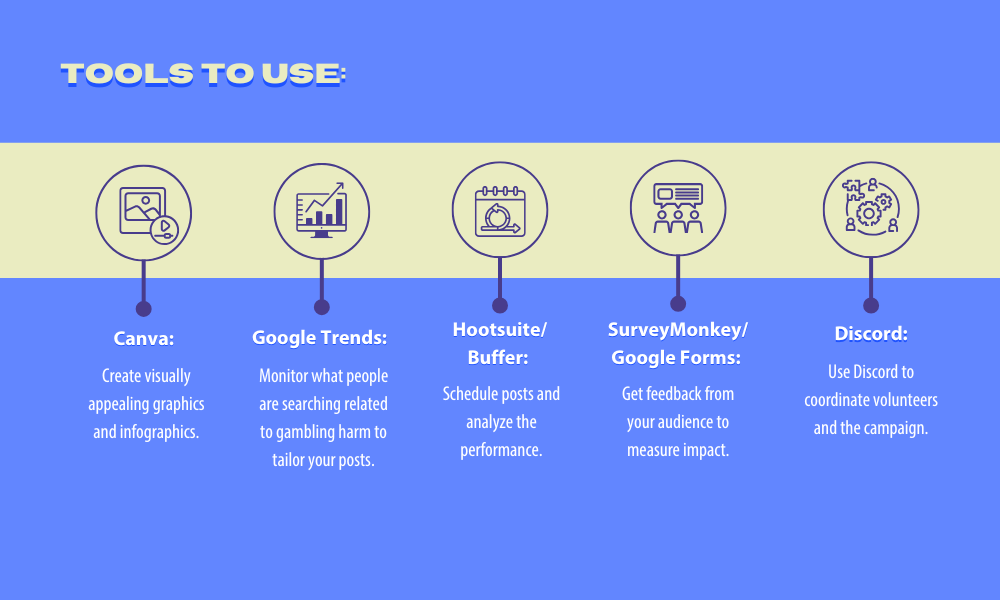
- Canva: Create visually appealing graphics and infographics.
- Google Trends: Monitor what people are searching related to gambling harm to tailor your posts.
- Hootsuite/Buffer: Schedule posts and analyze the performance.
- SurveyMonkey/Google Forms: Get feedback from your audience to measure impact.
- Use Discord to coordinate volunteers and the campaign
By combining clear objectives, effective messaging, and consistent engagement, your online campaign can help raise awareness about gambling harm and provide much-needed support to those in need.